

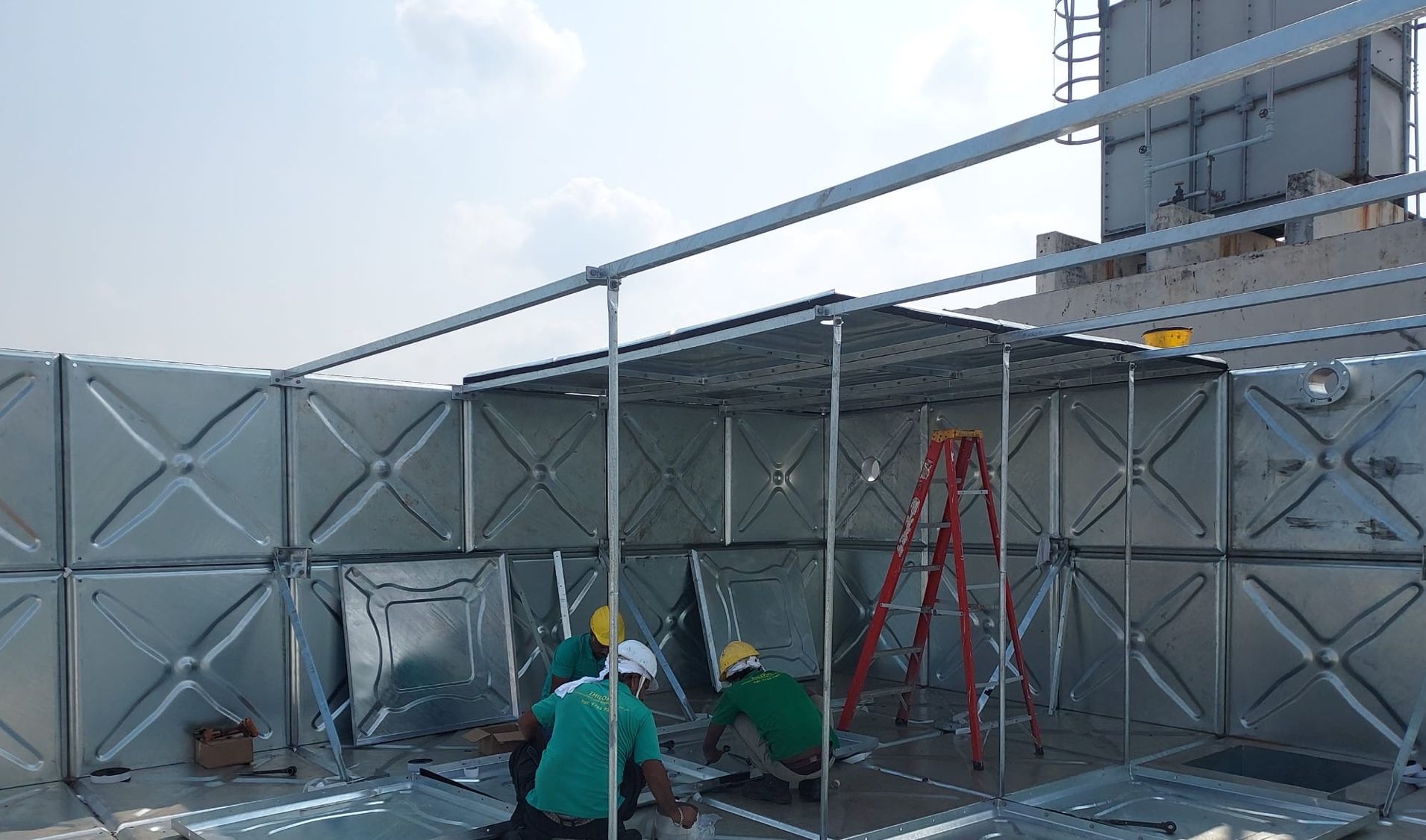
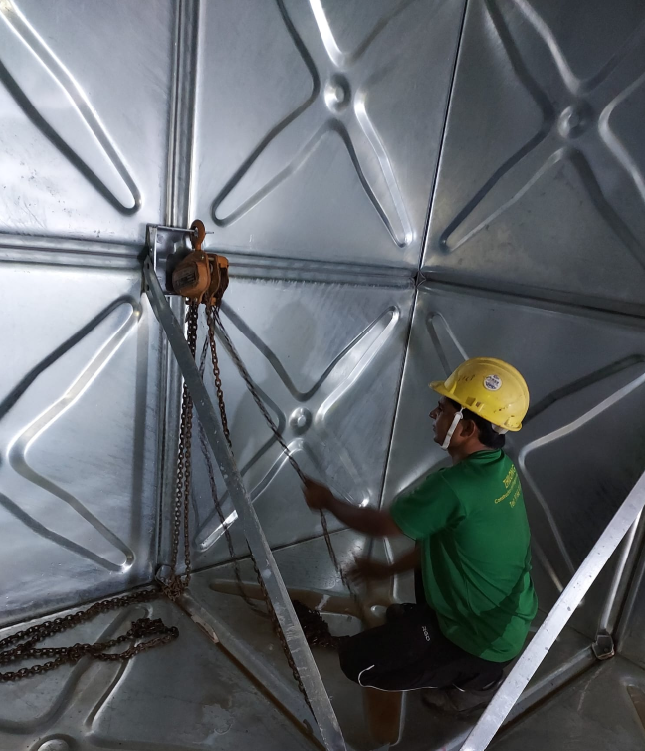
Water Tank Replacement Works
Ageing, corroded or non-compliant water storage tanks must be replaced to keep a building’s potable water supply safe. In Singapore, all water service plumbing works — including the replacement or installation of a water storage tank — must be carried out by a PUB Licensed Plumber (LP), who submits the works through the PUB Business & Professional Portal. MCSTs, building management agents and owners remain legally responsible under the Public Utilities (Water Supply) Regulations for keeping the installation compliant at all times.
Replacement tanks and fittings must use approved corrosion-resistant materials. Sectional Glass Reinforced Polyester (GRP) tanks must comply with Singapore Standard SS 245:2014 — tanks built to the superseded 1995 standard are not permitted for new installations — and stainless steel tanks must be at least Grade 316. Every tank must be watertight and lockable, fitted with insect-screened air vents and an overflow pipe, and sited away from prohibited locations such as directly beneath a sanitary or sewer line.
After replacement the tank is cleaned, disinfected and certified, and water samples are sent to a Singapore Accreditation Council-SINGLAS accredited laboratory for chemical and bacteriological testing. Thereafter the tank must be inspected and certified at least once every 12 months by a Licensed Plumber, in accordance with PUB Code of Practice SS 636.
Replacing a water storage tank in Singapore
Replacing an aged, corroded or non-compliant water storage tank requires hiring a PUB Licensed Plumber (LP), using PUB-compliant fittings and completing annual certification under PUB regulations for potable water tanks.
Licensing and Approvals
Licensed Plumber (LP): All water service plumbing works, including replacing water storage tanks, must be done by a PUB-certified Licensed Plumber
The LP must submit the replacement or installation works via the PUB Business & Professional Portal.
Tank Specifications and Materials
Approved Standards: Tanks and fittings must comply with PUB’s standards and requirements for potable water service installations, using approved corrosion-resistant materials
Design & Layout: Tanks must be watertight, locked, fitted with screened air vents, overflow pipes, and placed away from prohibited areas like directly beneath sanitary or sewer line
Strict Material Standards: Sectional Glass Reinforced Polyester (GRP) tanks must comply with Singapore Standard SS245:2014. Older tanks built under the 1995 standard are strictly prohibited for new installations. Stainless steel tanks must be at least Grade 316.
Testing and Maintenance
Annual Inspection: Tanks must be inspected, cleaned, disinfected, and certified at least once every 12 months by an LP.
Owner’s Maintenance Responsibility: While annual certification is not legally enforced, homeowners remain legally responsible under the PUB regulation for water supply for ensuring the tank stays clean, secure, and the water remains safe for consumption.
Water Quality Testing: Water samples must undergo chemical and bacteriological testing by a Singapore Accreditation Council (SAC-SINGLAS) accredited laboratory
SAC-SINGLAS Water Testing: Water samples must be sent to an accredited laboratory to test for strict parameters, including pH levels (7.0–9.0), turbidity (<5 NTU), total colony count (<500 cfu/ml), and the complete absence of E.Coli.
Physical Security: The tank must be completely watertight, fitted with fine insect-screened vents (maximum mesh size of 0.65mm), and have locked manhole covers to prevent unauthorized access or pest intrusion.
Penalties for Late Certification: Failure to complete and submit the annual certification on time can result in court prosecution with fines up to S$10,000, up to 12 months imprisonment, or both.
Do contact Zhilong Constructions and Engineering Pte Ltd if any mention requirement.
Do I need a Licensed Plumber to replace a water storage tank in Singapore?
Yes. All water service plumbing works, including the replacement or installation of a water storage tank, must be carried out by a PUB Licensed Plumber (LP). The LP is also responsible for submitting the replacement or installation works to PUB through the Business & Professional Portal. Works carried out by an unlicensed party do not comply with the Public Utilities (Water Supply) Regulations.
What standards must a replacement water storage tank meet?
Tanks and fittings must be of approved corrosion-resistant materials. Sectional Glass Reinforced Polyester (GRP) tanks must comply with Singapore Standard SS 245:2014; tanks built to the superseded 1995 standard are not accepted for new installations. Stainless steel tanks must be at least Grade 316. The tank must be watertight with a locked manhole cover, fitted with insect-screened air vents (maximum mesh size 0.65mm) and an overflow pipe, and must not be sited directly beneath a sanitary or sewer line.
How often must the tank be certified after it has been replaced?
At least once every 12 months. Any person responsible for maintaining a water service installation having a water storage tank shall engage a licensed plumber to inspect, and where necessary clean, disinfect and certify the tank. Water samples must pass chemical and bacteriological testing at a SAC-SINGLAS accredited laboratory, covering parameters such as pH (7.0–9.0), turbidity (below 5 NTU), total colony count (below 500 cfu/ml) and the complete absence of E. coli. Failure to complete and submit the annual certification on time can result in a fine of up to S$10,000, imprisonment of up to 12 months, or both.


